

What Musicians Can Actually Write Off
First, what's a write-off?
A write-off is a business expense you subtract from your income, so you pay less tax. Spend $500 on gear for your music, and the IRS can tax $500 less income.
The IRS rule is simple. The expense has to be normal for your kind of work and actually help your business. If it's for your music, it may count. If it's for your life, it usually doesn't.
Gear
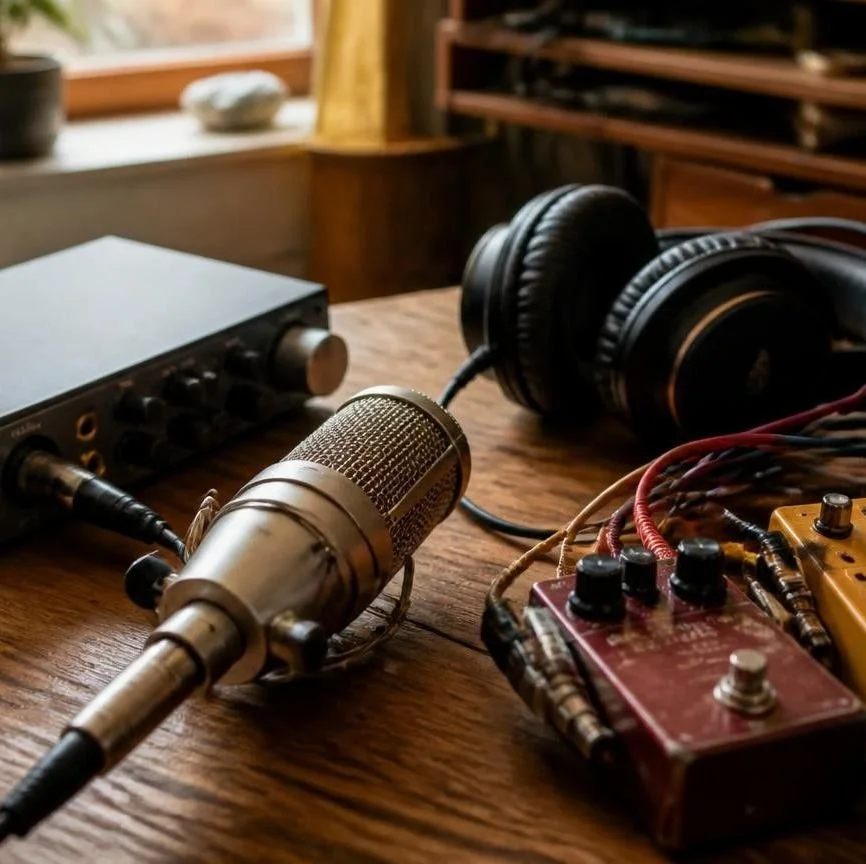
Instruments, mics, interfaces, headphones, cables, pedals, and monitors. A laptop counts too, but if you also use it for Netflix and school, only the music share counts.
Making the music
Studio time, rehearsal space, mixing, mastering, session players, and beats you buy or lease. Plus Splice, plugins, Ableton, Logic, and any other software you use to create.

Getting it out there
DistroKid or TuneCore fees, your website, Instagram ads, photo shoots, music videos, cover art, and playlist pitching. Your manager, lawyer, and tax pro may count too, if their work is tied to your music business.
Your home studio
If you have a spot at home used only for music, you may be able to deduct part of your rent or mortgage. The key word is only. The IRS requires regular and exclusive use. If your studio is also your bedroom, it usually won't qualify.

On the road
Flights, hotels, and gas for out-of-town gigs and sessions can count. Meals while you're traveling for work are generally 50% deductible. Your regular drive to a weekly local gig usually doesn't count.

The myths
That outfit you bought for the show only counts if you'd never wear it out in real life. A fire jacket you also wear to brunch won't pass. Spotify and Apple Music can be a gray area too. If you claim them, be ready to explain how they relate to your work.
Save the receipts
A write-off only counts if you can prove it. Snap a photo of every receipt, add a quick note about what it was for, and keep music spending in its own account. If something is borderline, keep extra notes. Future you will be glad you did.
Not sure what counts?
Book a Tax & Financial Diagnostic today, and we'll review your spending to find what you may be missing. Planning big gear purchases before December 31? Use our Year-End Tax Planning for Musicians checklist now.
Sources
- IRS, Deducting Business Expenses
- IRS, Home Office Deduction
- IRS, Publication 463, Travel, Gift, and Car Expenses
Written by Chevy Nicolas Crabb, MBA, founder of Regent Financial & Tax Advisors and former accountant at Sony Music, Epic Records, and Paramount Global.